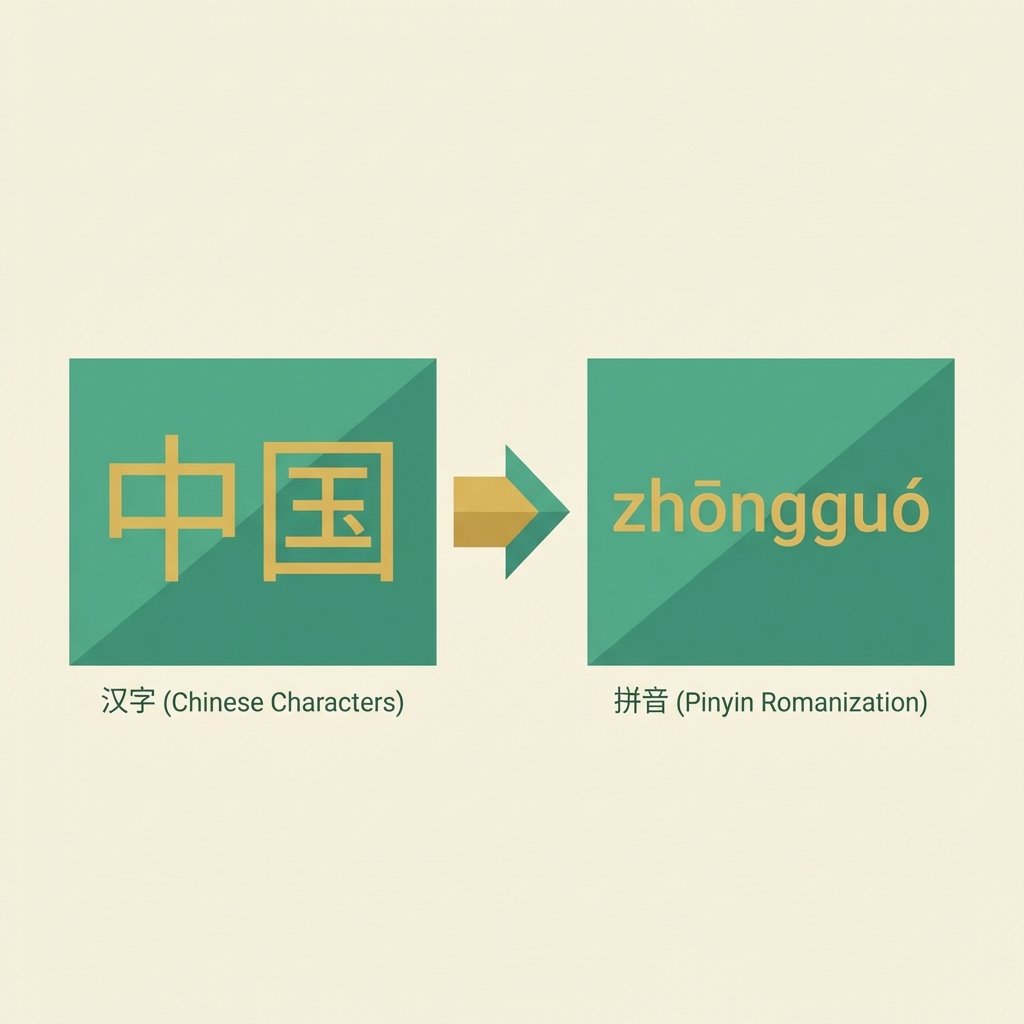
New Chinese learners face a choice: dive straight into characters or stick with Pinyin romanization first? The answer isn't either/or—it's understanding when each system serves you best.
What Is Pinyin?
Pinyin (拼音, "spelled sounds") is the official romanization system for Mandarin Chinese. It uses Latin letters with tone marks to represent Chinese pronunciation: 你好 becomes "nǐ hǎo." Pinyin enables typing Chinese on standard keyboards, looking up words in dictionaries, and learning pronunciation without knowing characters.
The Case for Starting with Characters
Characters are not optional for true Chinese literacy—you'll need them eventually, so why delay? Learning characters and pronunciation together creates stronger neural connections. Pinyin-first learners often develop dependency that's hard to break. Chinese people don't use Pinyin in daily life; reading signs, menus, and messages requires characters.
The Case for Pinyin First
Pinyin lets you start speaking immediately without the character learning curve. Pronunciation patterns and tones deserve focused attention before adding writing complexity. HSK 1 requires only 150 characters—learning them alongside Pinyin is manageable. Using Pinyin as training wheels can build confidence before tackling the full writing system.
A Balanced Approach
Use Pinyin for initial pronunciation learning and as a crutch for unknown characters—but always with characters visible. Learn characters from the start, but don't let character struggles slow your speaking progress. Gradually reduce Pinyin dependence; by HSK 3, you should recognize most vocabulary without romanization.
Practical Guidelines
When learning new words: see the character, hear the pronunciation, read the Pinyin—in
that order.
When reviewing: try to read characters without Pinyin
first.
When typing: use Pinyin input but select correct characters
deliberately.
When speaking: think in sounds and tones, not spelling.
Learn Both Together
Avena displays characters prominently with Pinyin as support, training you to recognize characters while ensuring correct pronunciation.
Start Learning